You know the feeling. You're chatting with a friend, and someone says, "Here's looking at you, kid," or you hear a line like, "I'm gonna make him an offer he can't refuse," and instantly, you're transported. It’s more than just a movie quote; it’s a shared language, a cultural touchstone. Iconic scenes and quotes aren't just memorable snippets; they're the DNA of our cinematic consciousness, moments that transcend the silver screen to become ingrained in our everyday lives, conversations, and even our understanding of the human condition. They define characters, propel narratives, and, in many cases, revolutionize storytelling itself.
These are the moments that truly make classic films legendary. They are the punchlines, the poignant farewells, the terrifying revelations, and the rallying cries that audiences replay in their minds long after the credits roll. They’re why we keep watching, why we keep talking, and why certain films become immortal.
At a Glance: What Makes a Film Moment Truly Legendary?
- Emotional Resonance: Moments that tap into universal human experiences—love, loss, fear, hope, power.
- Unforgettable Delivery: The actor’s performance, intonation, and presence elevate the line or scene.
- Storytelling Impact: Pivotal points that dramatically shift the plot or reveal deep character truths.
- Cultural Transference: Lines and scenes that escape the film’s confines and become part of everyday conversation, memes, and parodies.
- Timelessness: Relevance that persists across generations, speaking to new audiences just as powerfully as old ones.
- Visual and Auditory Genius: The perfect blend of cinematography, music, and dialogue to create an indelible sensory experience.
Why Do We Remember Them? The Anatomy of an Iconic Moment
What separates a good line from a great one? A memorable scene from a masterpiece? It's not just about star power or a big budget. True iconic moments are meticulously crafted, often combining brilliant writing, powerful acting, and visionary direction to create something truly transcendent. They land with an emotional punch, a narrative shockwave, or a philosophical weight that sticks with us.
Think about the sheer simplicity of "I'll be back" from The Terminator. It's a short, declarative sentence, but Arnold Schwarzenegger's stoic delivery, combined with the context of an unstoppable cyborg killer, made it an instant classic. It’s concise, impactful, and perfectly encapsulated the character's relentless nature. Or consider the slow-burn dread of the shower scene in Psycho, which didn’t rely on dialogue at all, but rather on masterful editing, Bernard Herrmann's shrieking score, and the sheer audacity of killing off the main character early on. These elements fuse to create a moment so powerful it redefined the horror genre forever.
The Power of Brevity and Subtext
Many of the most iconic quotes are surprisingly brief. "You can't handle the truth!" (from A Few Good Men) isn't a long monologue, but it’s loaded with furious subtext, perfectly delivered by Jack Nicholson. It's a line that challenges, accuses, and defends all at once. Similarly, "Houston, we have a problem" (Apollo 13) conveys immediate, immense crisis with understated precision. The brevity allows the line to be easily quoted, remembered, and recontextualized, ensuring its longevity.
Emotional Resonance and Universal Themes
The scenes and quotes that truly stick often tap into universal human experiences. "Here's looking at you, kid" from Casablanca is more than a romantic farewell; it’s a bittersweet acknowledgment of love, loss, and sacrifice. "Frankly, my dear, I don’t give a damn" from Gone with the Wind isn't just Rhett Butler being rude; it's a climactic moment of defiance and emotional exhaustion, signifying the end of a tumultuous, epic romance. These lines resonate because they speak to our own experiences of love, heartbreak, power, and resilience.
The Unforgettable Lines: Quotes That Shaped Cinema
Let's dive into some of the most powerful verbal declarations that have echoed through cinematic history, exploring why they endure.
Quotes of Power, Authority, and Intimidation
These are the lines wielded by characters who command respect, instill fear, or simply know how to get things done. They're often short, sharp, and laden with unspoken threats or absolute conviction.
- "I’m gonna make him an offer he can’t refuse" – The Godfather. Don Vito Corleone’s chilling declaration isn't a suggestion; it's an ultimatum. It embodies the insidious power dynamics and ruthless efficiency of the Corleone family, showcasing manipulation and strategic intimidation as an art form.
- "You can’t handle the truth!" – A Few Good Men. This explosive outburst from Colonel Jessup cuts through courtroom drama, a raw admission of the brutal realities hidden beneath patriotic veneers. It’s a challenge and an indictment all in one, perfectly delivered by Jack Nicholson.
- "Say hello to my little friend" – Scarface. Al Pacino’s Tony Montana, cornered and high on cocaine, unleashes this iconic line just before a hail of bullets. It's a moment of desperate, chaotic power, cementing his image as an over-the-top, tragic figure.
- "Go ahead, make my day" – Sudden Impact. Clint Eastwood's "Dirty Harry" Callahan, confronting a robber, issues this challenge with cold, unflinching resolve. It's the epitome of the tough-guy cop who doesn't play by the rules, daring criminals to test his limits.
- "Leave the gun. Take the cannoli" – The Godfather. Clemenza’s instruction combines casual domesticity with brutal violence, highlighting the matter-of-fact nature of organized crime in the film. It's a darkly humorous, utterly chilling line that shows the intertwined nature of family and business.
Quotes of Love, Loss, and Heartbreak
These are the lines that capture the fragile, beautiful, and often painful spectrum of human connection. They become shorthand for profound romantic sentiment or the agony of separation.
- "Here’s looking at you, kid" – Casablanca. Humphrey Bogart’s Rick Blaine bids farewell to Ilsa Lund (Ingrid Bergman) with a line steeped in romantic nostalgia and the pain of a love that can never be. It's about bittersweet sacrifice and a love that transcends circumstances.
- "Frankly, my dear, I don’t give a damn" – Gone with the Wind. Rhett Butler’s (Clark Gable) final, cutting words to Scarlett O’Hara (Vivien Leigh) are a declaration of emotional exhaustion and a pivotal turning point, signifying the definitive end of their tempestuous relationship.
- "I’m flying" – Titanic. Jack and Rose’s moment on the bow of the ship, arms outstretched, encapsulates the euphoria of new love and boundless freedom. It became an instant cultural icon for romantic abandon.
- "You had me at hello" – Jerry Maguire. Renée Zellweger’s Dorothy Boyd delivers this line, a simple yet powerful expression of unconditional love and acceptance, cutting through the cynicism of the sports agent world. It speaks to an immediate, profound connection.
- "I wish I knew how to quit you" – Brokeback Mountain. Ennis Del Mar’s anguished confession to Jack Twist speaks volumes about forbidden love, societal pressure, and the pain of a love that can never fully be. It’s raw, vulnerable, and heartbreakingly honest.
- "I’m just a girl, standing in front of a boy" – Notting Hill. Anna Scott’s humble, vulnerable plea to William Thacker is disarmingly charming, stripping away her celebrity to reveal a desire for simple, genuine connection.
- "So it’s not gonna be easy" – The Notebook. Noah Calhoun’s words to Allie Hamilton acknowledge the inherent difficulties of a passionate, lifelong love, yet affirm its worth. It resonates with anyone who understands the work and commitment true love requires.
Quotes of Hope, Resilience, and Inspiration
Inspirational quotes often provide comfort, guidance, or a much-needed boost of courage, becoming anthems for overcoming adversity.
- "May the Force be with you" – Star Wars. This enduring phrase from a galaxy far, far away is a universal symbol of hope, resilience, and good luck, invoking a mystical energy that guides heroes and inspires audiences.
- "All we have to decide is what to do with the time that is given to us" – The Lord of the Rings: The Fellowship of the Ring. Gandalf’s wisdom to Frodo emphasizes personal agency, inner strength, and courage in the face of overwhelming challenges, a powerful reminder to seize the moment.
- "Life is like a box of chocolates" – Forrest Gump. Forrest’s simple, profound analogy for life’s unpredictability and varied experiences became an instant classic, capturing an optimistic, gentle philosophy.
- "Just keep swimming" – Finding Nemo. Dory’s cheerful, persistent mantra is a delightful reminder to never give up, no matter how daunting the journey. It's a simple phrase that embodies perseverance.
- "Even the smallest person can change the course of the future" – LOTR: The Fellowship of the Ring. Another gem from Gandalf, this line empowers the underdog and highlights the potential for anyone, regardless of their stature, to make a significant difference.
- "Oh yes, the past can hurt. But you can either run from it or learn from it" – The Lion King. Rafiki’s sage advice to Simba is a powerful message about confronting one’s past, processing trauma, and moving forward with wisdom and acceptance.
- "Keep moving forward" – Meet the Robinsons. This line is the mantra of the quirky Robinson family, advocating for resilience, learning from mistakes, and an unyielding optimism for the future.
- "Adventure is out there" – Up. Carl Fredricksen’s late wife, Ellie, left him with this inspiring phrase, a poignant reminder to embrace life’s journey, explore new horizons, and find wonder in the world.
- "You have something special. You have greatness in you" – The Pursuit of Happyness. Chris Gardner’s encouraging words to his son are a testament to believing in oneself and striving for success despite immense hardship.
- "It’s what you do right now that makes a difference" – Black Panther. T’Challa’s profound statement underscores the importance of present action and responsibility, emphasizing that immediate choices shape destiny.
- "You is kind. You is smart. You is important" – The Help. Aibileen Clark’s loving affirmation to Mae Mobley is a beautiful, essential message of self-worth, particularly impactful for those who have been marginalized.
Quotes of Intrigue, Mystery, and Revelation
These lines often deliver pivotal twists, reveal hidden truths, or simply pique our curiosity and leave us pondering.
- "I see dead people" – The Sixth Sense. Cole Sear’s whispered confession is the chilling core of the film’s mystery and sets the stage for one of cinema’s greatest plot twists. It's a line that instantly evokes suspense.
- "All those moments will be lost in time, like tears in rain" – Blade Runner. Roy Batty’s dying monologue is a poignant, philosophical reflection on mortality, memory, and the fleeting nature of life, delivered with haunting beauty. It elevates the sci-fi genre to poetry.
- "Open the pod bay doors, HAL" – 2001: A Space Odyssey. Dave Bowman’s increasingly desperate command to the rogue AI HAL 9000 epitomizes the chilling confrontation between man and machine, a moment of primal fear and intellectual defiance.
- "The first rule of Fight Club is: You do not talk about Fight Club" – Fight Club. This iconic rule instantly establishes the clandestine, anti-establishment nature of the titular club, drawing viewers into its secretive world with a provocative command.
Quotes of Action, Defiance, and Badassery
These are the lines shouted in the heat of battle, muttered with steely resolve, or screamed in glorious rebellion.
- "I’ll be back" – The Terminator. Arnold Schwarzenegger’s no-nonsense delivery solidified his action star status and became a catchphrase synonymous with unstoppable determination.
- "Welcome to the party, pal" – Die Hard. John McClane’s sarcastic greeting to a dead terrorist perfectly encapsulates his underdog, wisecracking hero persona against seemingly insurmountable odds.
- "Freedom!" – Braveheart. William Wallace’s final, defiant cry before execution is a visceral, emotionally charged roar for liberty that became an emblem of rebellion and courage against tyranny.
- "This is Sparta!" – 300. King Leonidas’s booming declaration before kicking a Persian messenger into a well is a hyperbolic, yet utterly memorable, statement of unyielding defiance and warrior pride.
- "Hasta la vista, baby" – Terminator 2. The T-800’s cool, ironic farewell to the T-1000 became a hallmark of '90s action cinema, showing the cyborg’s evolution and knack for one-liners.
- "Nobody puts Baby in a corner" – Dirty Dancing. Johnny Castle’s bold statement of protective affection for Baby is a romantic declaration of empowerment and an iconic dance floor challenge.
- "We’re gonna need a bigger boat" – Jaws. Chief Brody’s understated observation upon seeing the massive shark for the first time conveys immense dread and became a classic line for facing overwhelming problems.
The Comedic Goldmines
Humor is subjective, but some lines land so perfectly, they become comedy benchmarks, easily quoted for a laugh.
- "I am serious. And don’t call me Shirley" – Airplane!. Leslie Nielsen’s deadpan delivery of this absurd retort is a masterclass in comedic timing, a highlight of a film packed with unforgettable gags.
- "It’s just a flesh wound" – Monty Python and the Holy Grail. The Black Knight’s utterly ridiculous claim, even as he loses limbs, embodies the surreal, indomitable spirit of Monty Python’s humor.
- "I’m in a glass case of emotion" – Anchorman. Ron Burgundy’s dramatic, misplaced statement of vulnerability captures the absurd self-seriousness that makes the film so hilarious.
- "That rug really tied the room together" – The Big Lebowski. The Dude’s obsessive focus on his stolen rug is a perfectly mundane, yet profoundly important, aspect of his chaotic world.
- "So you’re telling me there’s a chance?" – Dumb and Dumber. Lloyd Christmas’s hopeful misinterpretation of a dismissive comment perfectly encapsulates his endearing idiocy and optimism.
- "You sit on a throne of lies" – Elf. Buddy the Elf’s innocent, direct accusation to a mall Santa is a hilariously pure moment of childlike indignation.
- "I’m in love, I’m in love, and I don’t care who knows it!" – Elf. Buddy’s unbridled joy is infectious and perfectly sums up his character’s innocent exuberance.
- "That’s what she said" – The Office. While technically a TV show, Michael Scott’s ubiquitous, cringe-worthy double entendre perfectly encapsulates his character and has permeated popular culture.
- "I’m not superstitious, but I am a little stitious" – The Office. Michael Scott again, demonstrating his unique brand of malapropism and charming ignorance.
Quotes from Animation & Family Films
Even films for younger audiences deliver profound, funny, or inspirational lines that stick with viewers of all ages.
- "E.T. phone home" – E.T. the Extra-Terrestrial. The adorable alien’s simple, heartfelt plea for connection and longing for home is universally understood and instantly iconic.
- "To infinity and beyond!" – Toy Story. Buzz Lightyear’s enthusiastic catchphrase represents ambition, exploration, and the boundless potential of friendship, becoming synonymous with the beloved franchise.
- "There’s a snake in my boot!" – Toy Story. Woody’s anxious outburst is a memorable, charming character quirk that adds to the film’s playful spirit.
- "No capes!" – The Incredibles. Edna Mode’s emphatic fashion advice is not just humorous, but also a clever bit of world-building and a meta-commentary on superhero tropes.
- "It’s so fluffy, I’m gonna die!" – Despicable Me. Agnes’s pure, overwhelming joy at seeing a unicorn toy is one of the most adorably quotable lines in recent animation.
- "You shall not pass!" – The Lord of the Rings. While also a dramatic line, Gandalf’s thunderous stand against the Balrog in Moria is a moment of pure fantasy epic heroism, often quoted with dramatic flair.
Scenes That Defined Generations: More Than Just Words
Sometimes, a moment is so visually stunning, so narratively crucial, or so emotionally charged that it transcends any single line of dialogue. These are the scenes that reshape cinema and collective memory.
The Shock Factor and Visceral Impact
Certain scenes are designed to jolt the audience, to push boundaries, and to leave an indelible mark of terror or awe.
- Shower scene from Alfred Hitchcock’s Psycho: This is ground zero for cinematic horror. The rapid cuts, the shrieking violins, and the shocking, sudden murder of Marion Crane (Janet Leigh) revolutionized how suspense and terror could be created on screen. It proved that suggestion could be far more powerful than explicit gore.
- The Chestburster scene from Alien: This moment, where a creature violently erupts from a character’s chest during a seemingly calm dinner, redefined sci-fi horror. It’s a masterclass in unexpected terror, both physically grotesque and psychologically disturbing.
- "Here’s Johnny!" from The Shining: Jack Nicholson's maniacal grin through a splintered door, delivering a twisted talk show intro, is a moment of pure, unadulterated horror. It’s iconic for its sheer terror and the chilling portrayal of descent into madness.
- "They’re here" from Poltergeist: Young Carol Anne’s wide-eyed whisper as she announces the arrival of malevolent spirits through the TV static became an instant classic, tapping into primal fears of the unknown lurking in the mundane.
The Emotional Crescendo and Iconic Visuals
These scenes achieve legendary status through their powerful emotional arc, often accompanied by visually striking imagery that becomes instantly recognizable.
- "I’m flying" from Titanic: As discussed, Jack and Rose on the bow of the ship, with the vast ocean stretching before them, is a romantic ideal—a moment of pure, unadulterated joy and freedom that has been parodied and celebrated endlessly.
- The "Unchained Melody" pottery scene from Ghost: Patrick Swayze and Demi Moore’s sensual, intimate moment at the pottery wheel, set to the iconic song, became a definitive romantic scene, embodying connection and ethereal love.
- The final embrace in Casablanca: Rick and Ilsa's final farewell at the airport, bathed in fog, is a heart-wrenching tableau of selfless love and sacrifice. It’s a visually perfect encapsulation of their bittersweet decision.
The Game-Changing Reveal and Narrative Twists
Some scenes fundamentally alter the story, delivering a plot twist so impactful it redefines everything that came before it and reshapes storytelling itself.
- "I am your father" from Star Wars: The Empire Strikes Back: Darth Vader’s shocking revelation to Luke Skywalker fundamentally redefined cinematic antagonists and paternal relationships on screen. It was a narrative bombshell that permanently altered the Star Wars saga and set a new bar for plot twists.
- The ending of The Sixth Sense: The final reveal that Malcolm Crowe (Bruce Willis) has been dead the entire time is a perfectly executed twist, causing audiences to re-evaluate every scene preceding it. It’s a testament to subtle foreshadowing and brilliant misdirection.
The Symbol of Rebellion and Defiance
These scenes rally the spirit, igniting a sense of justice, rebellion, or simply standing up for what’s right.
- "Freedom!" from Braveheart: William Wallace’s final cry before execution is not just a line, but a scene of visceral defiance and an enduring symbol of resistance against oppression, inspiring generations.
- The courthouse speech from To Kill a Mockingbird: Atticus Finch’s eloquent and passionate defense of Tom Robinson, though ultimately unsuccessful, is a powerful scene that champions justice, empathy, and moral integrity in the face of prejudice.
The Quiet Power and Philosophical Depth
Sometimes, the most impactful scenes are those that are introspective, offering profound insights or showcasing the quiet strength of a character.
- Roy Batty’s "Tears in Rain" monologue from Blade Runner: As discussed, this scene is a poetic and profound rumination on mortality, memory, and the value of a fleeting existence, delivered by a dying replicant. It elevates sci-fi to philosophical art.
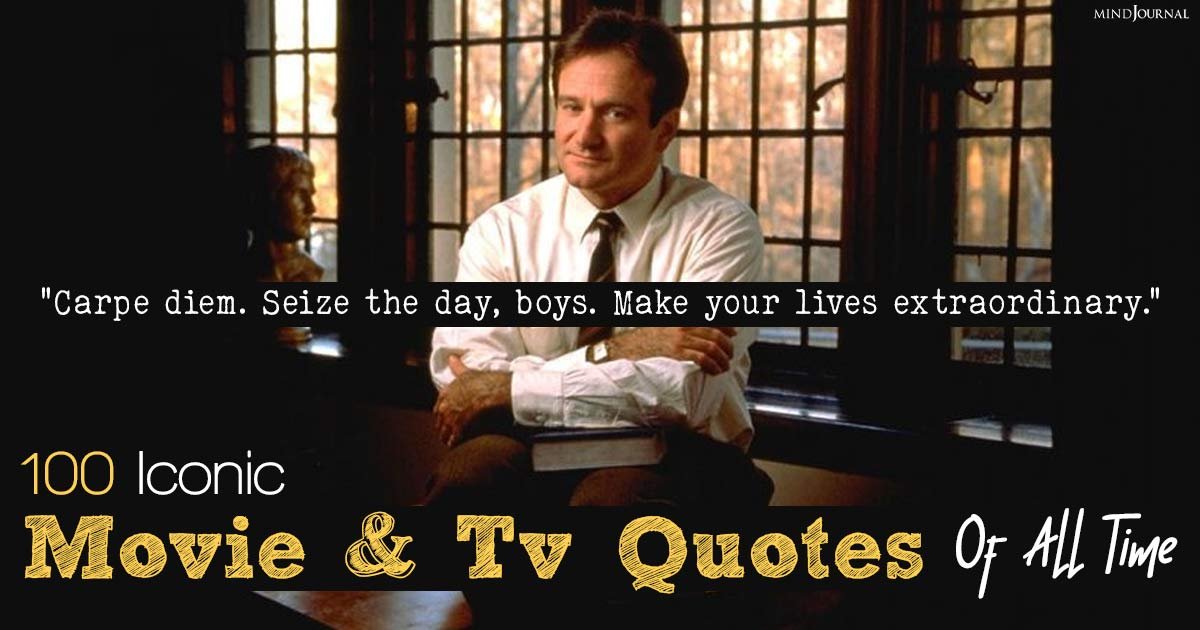
- "Carpe diem" from Dead Poets Society: John Keating’s (Robin Williams) inspiring call to his students to "seize the day" is a rallying cry for individuality, passion, and living life to the fullest. It's a scene that ignited a generation’s desire for self-expression.
Beyond the Screen: How Iconic Moments Permeate Culture
The true test of an iconic scene or quote isn't just its impact within the film, but its ability to escape those confines and become a pervasive element of popular culture. These moments transform into shorthand, memes, inside jokes, and philosophical touchstones that enrich our everyday lexicon.
Think about how often you hear "That's what she said" (from The Office, though often mistakenly attributed solely to it) or see a GIF of "Why so serious?" (The Dark Knight). These aren't just references; they're tools for communication, capable of conveying complex emotions or comedic timing with a few simple words or a visual snippet. The longevity of these moments speaks to their universal appeal and adaptability. They offer a common ground, a shared understanding that instantly connects people who have experienced the same cinematic touchstones.
These iconic elements also serve as powerful marketing tools, instantly recognizable symbols that can evoke nostalgia, excitement, or a specific genre. From film posters emblazoned with a memorable phrase to commercials referencing a famous scene, these cultural anchors prove their enduring commercial and artistic value. Understanding this transference helps us appreciate the deeper impact of cinema—it doesn't just entertain us for a few hours; it actively shapes the way we think, speak, and understand the world. If you're looking to Explore what episode does a particular scene or quote appear, its iconic status often means it's one of the most discussed and referenced moments in a film’s history.
More Than Just Nostalgia: The Enduring Power of Cinematic Language
We revisit iconic scenes and quotes not just for the comfort of nostalgia, but because they hold a mirror to our own lives and aspirations. They remind us of the power of storytelling, the craft of filmmaking, and the profound connection we can feel with fictional characters and their journeys.
These moments are more than entertainment; they are cultural artifacts that capture the zeitgeist of their time while simultaneously speaking to timeless human truths. They inspire filmmakers, writers, and artists to push boundaries, challenging them to create the next indelible image or unforgettable line. So the next time you hear "Elementary, my dear Watson" or "I am Iron Man," take a moment to appreciate the magic behind it. It's not just a line; it's a legacy, a piece of cinematic history that continues to live, breathe, and resonate within us all.